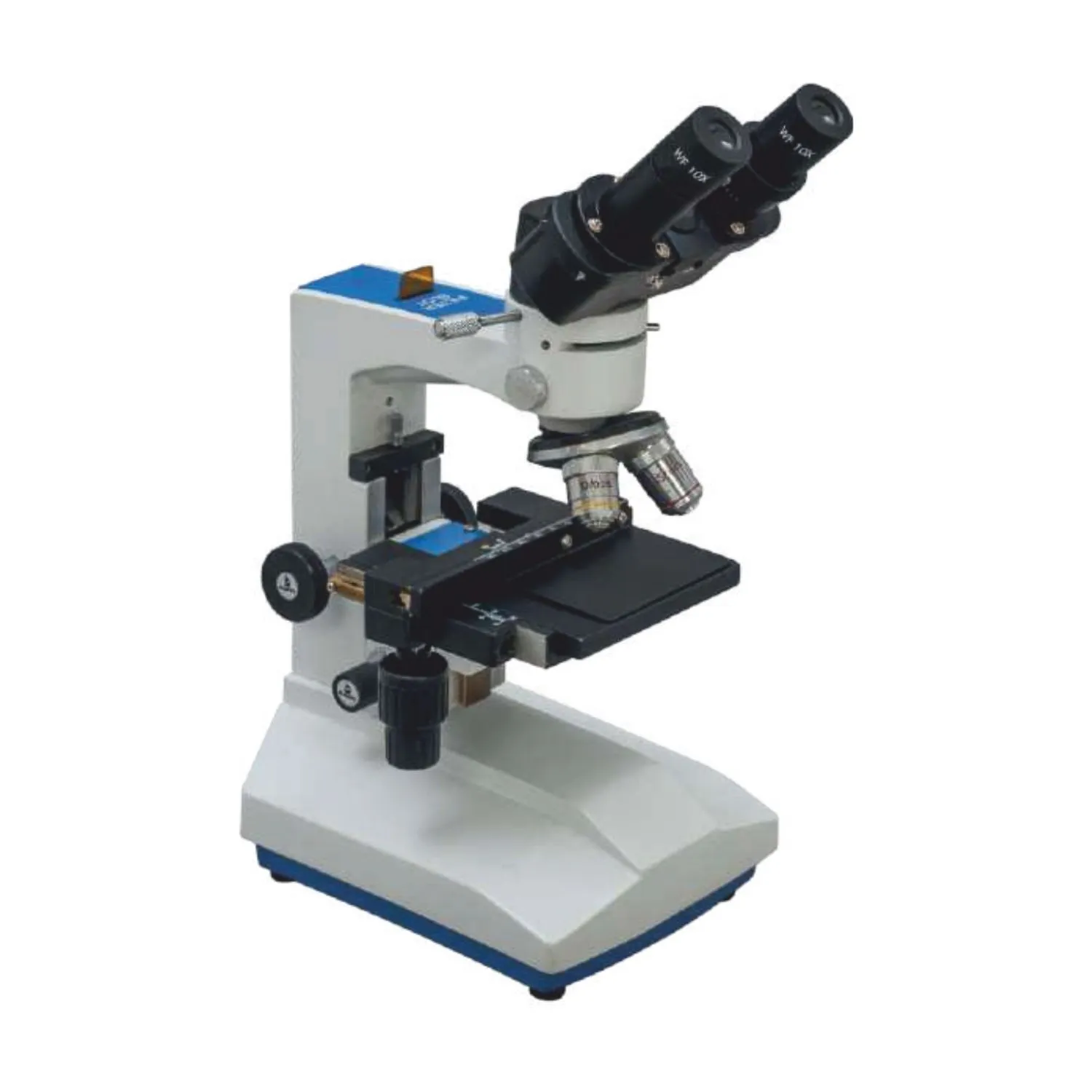

Binocular Metallurgical Microscopes (MM-3)
The MM-3 Binocular Metallurgical Microscope is designed for reflected light examination of opaque metallic samples in laboratory environments. It features a binocular observation head with hard coated prisms, a stable mechanical structure, and a graduated mechanical stage. Bright field horizontal illumination with centering provision, variable light control, and metallurgical optics enable detailed surface analysis for quality control, education, and routine metallurgical investigations.
Binocular Metallurgical Microscopes (MM-3)
Technical Specification Table
| Specification | Details |
|---|---|
| Model | MM-3 |
| Microscope Type | Binocular Metallurgical Microscope |
| Observation Head | Binocular head with hard coated prisms |
| Illumination Type | Bright field horizontal illumination |
| Illumination Features | Centering provision |
| Nosepiece | Quadruple revolving nosepiece |
| Stage Type | Special graduated mechanical stage |
| Light Control | Variable light control through heavy-duty transformer |
| Objectives (Standard) | 10x, 45x |
| Objectives (Optional) | 5x, 100x |
| Eyepieces | WF10x (paired) |
| Magnification Range | 100x to 450x |
| Packaging | Inner thermocol or styrofoam packing with outer cardboard box |
Key Features
-
Binocular observation head with hard coated prisms
-
Designed for reflected light metallurgical microscopy
-
Bright field horizontal illuminator with centering provision
-
Quadruple revolving nosepiece for quick objective change
-
Special graduated mechanical stage for precise movement
-
Variable light intensity control using heavy-duty transformer
-
Wide field paired eyepieces for comfortable viewing
-
Metallurgical objectives for surface structure examination
-
Stable mechanical construction for laboratory environments
-
Suitable magnification range for routine metallurgical work
Working Principle
The MM-3 Metallurgical Microscope operates by directing bright field reflected light onto the surface of opaque specimens. The reflected light is collected by metallurgical objectives and transmitted through hard coated prism optics to the binocular eyepieces. Illumination intensity and centering are adjusted for contrast control, while the graduated mechanical stage allows accurate positioning of samples during surface structure observation.
Applications / Use Cases
-
Metallurgical surface structure analysis
-
Quality control of metal components
-
Material science laboratory studies
-
Failure and fracture analysis
-
Educational training in metallurgical microscopy
-
Industrial inspection of treated metal surfaces