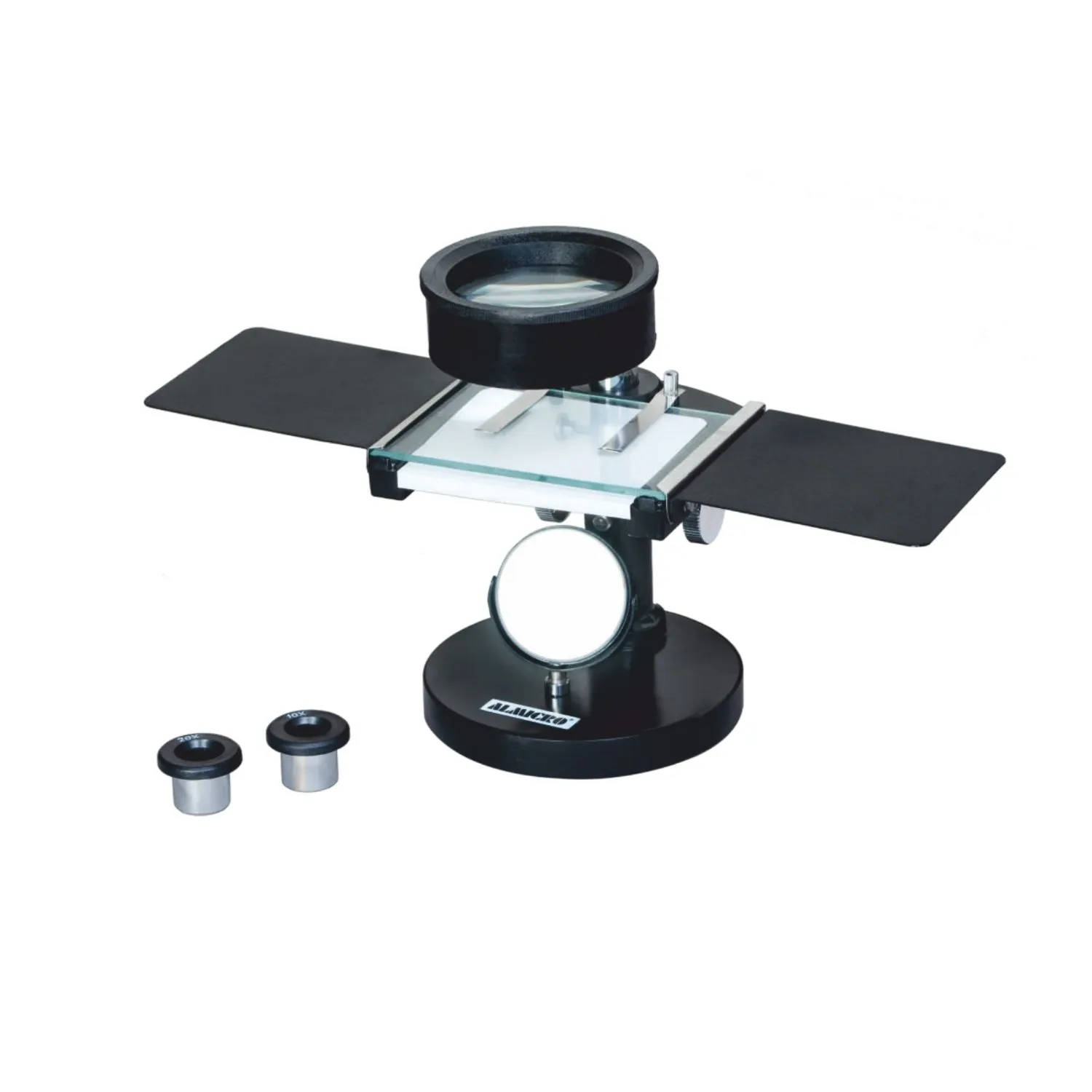
Dissecting Microscope (Md (2))

The Dissecting Microscope MD-1 is designed for detailed biological demonstrations, organism study, and precise dissection work. It offers clear optics, a versatile stage, smooth focusing, and stable support. Ideal for schools, colleges, and research labs that require accurate, low-power stereo observation for practical training.

Dissecting Microscope (Md (2))

Technical Specifications – Dissecting Microscope MD-1

Specification Details
Eyepieces High-eye-point 10X and 20X lenses
Viewing Arm Jointed arm enabling full-area stage scanning
Stage Size 85 mm × 75 mm
Stage Design Glass stage with spring clips; white/black metal plate for background contrast
Mirror Substage plano-concave mirror for daylight and artificial light reflection
Mechanism Rack and pinion enclosed inside stage support pillar
Focusing Side-mounted knobs for smooth focusing
Hand Rests Detachable hand rests on both sides for steady dissection
Use Case Demonstration, organism study, biology training, fine dissection work


Key Features – Dissecting Microscope MD-1


Clear and Comfortable Viewing

  • High-eye-point 10X and 20X lenses for relaxed, wide observation.

  • Jointed arm design allows scanning of the entire stage area.


Functional and Versatile Stage

  • 85 mm × 75 mm glass stage supports easy specimen placement.

  • Spring-loaded clips keep samples secure during study.

  • White/black metal background plate enhances contrast for different specimens.


Reliable Illumination

  • Plano-concave mirror ensures effective reflection of natural and artificial light.

  • Works perfectly in classrooms without a built-in light source.


Smooth Focusing Control

  • Rack and pinion mechanism enclosed for durability and accuracy.

  • Side knobs provide controlled focusing during demonstrations or dissections.


Stable Dissection Support

  • Detachable hand rests on both sides offer steady positioning during delicate work.

  • Ideal for anatomy, botany, zoology, and entomology practicals.


Working Purpose / Applications

The MD-1 Dissecting Microscope is suitable for close examination of insects, leaves, crystals, seeds, microorganisms, and small biological structures. It is widely used in school and college laboratories, training centres, and basic research work where low-magnification surface study or dissection is required.


Frequently Asked Questions


Q1. What type of microscope is this, and what kind of work is it visually intended for?
This is a senior dissecting microscope designed for low-magnification observation and manual dissection tasks. The open stage, large viewing lens, and ample working space indicate suitability for examining specimens while handling or cutting them directly.


Q2. How does the monocular head affect practical use and comfort?
The monocular head allows observation through a single eyepiece, which is suitable for short to moderate duration work. It works well for demonstrations and routine practical sessions but is not meant for long continuous viewing that requires binocular comfort.


Q3. What advantage does the large front viewing lens provide during observation?
The large-diameter front lens offers a wider field of view, allowing users to see more of the specimen at once. This is especially useful during dissections where understanding overall structure and spatial orientation is more important than very high magnification.


Q4. What can be understood about the illumination system from the image?
The microscope uses a mirror-based illumination system positioned below the stage. It reflects natural or external light onto the specimen, making it suitable for basic lab environments, though light intensity and direction are not precisely adjustable.


Q5. Who should ideally use this microscope based on its visible design?
This microscope is well suited for senior school students, teaching laboratories, and routine biological dissection work. It is not designed for slide-based microscopy, cellular analysis, or advanced diagnostic laboratory applications.


Q6. What does the mechanical design suggest about durability and maintenance needs?
The heavy base, simple focusing mechanism, and minimal optical complexity indicate a durable and stable instrument. Maintenance requirements are low and mainly involve regular cleaning of lenses and keeping the mirror and stage free from dust or damage.

... existing scripts ... >