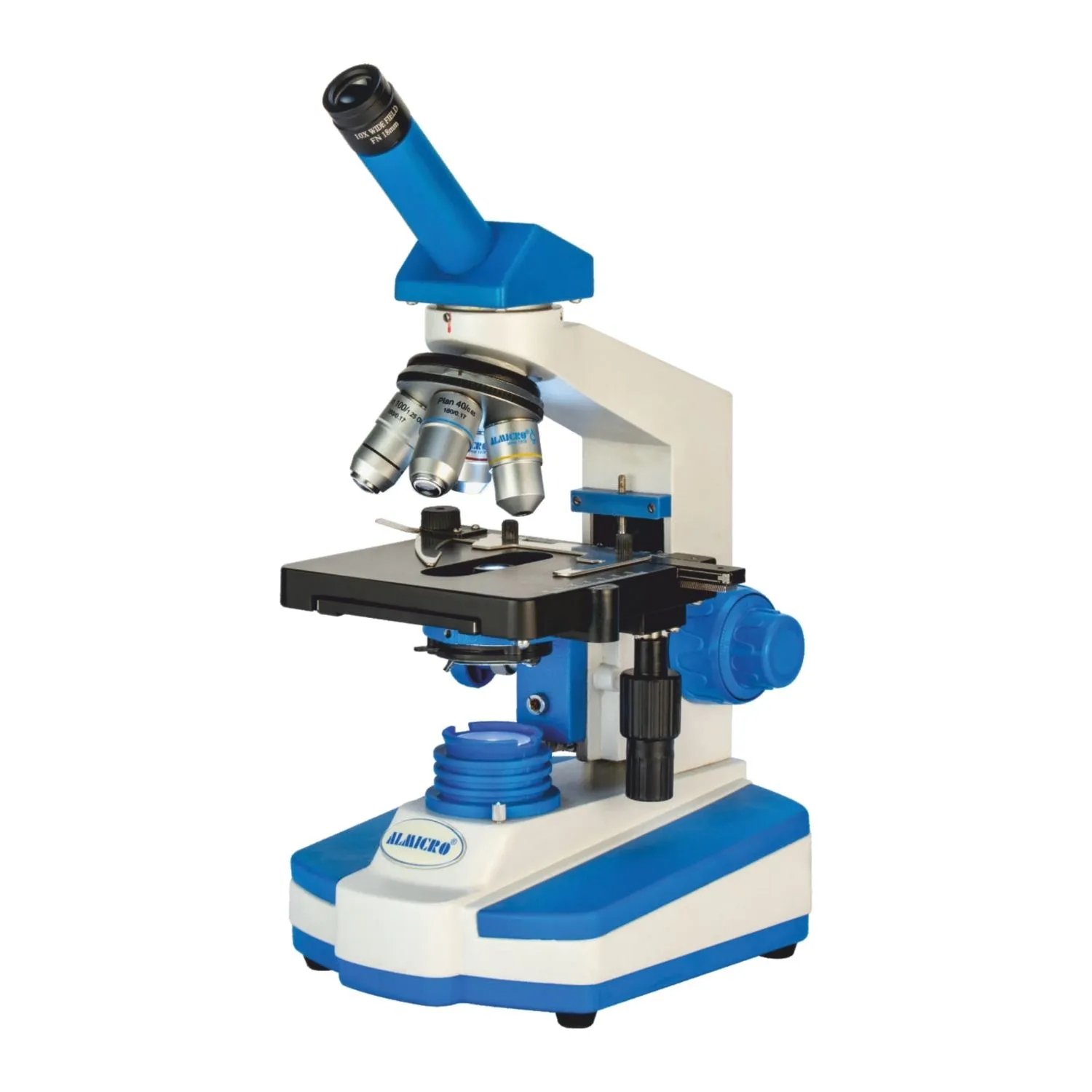
Research Inclined Monocular Microscope (BM-8mo)

The BM-8MO is a reliable research microscope for routine study and training labs. It gives clear images through semi-plan achromatic objectives. The inclined monocular head supports easy viewing for beginners. The LED lighting offers bright and stable illumination for all magnifications.

Research Inclined Monocular Microscope (BM-8mo)

Specification Table: Research Inclined Monocular Microscope BM-8MO


Specification Details
Optical system DIN size semi-plan achromatic system
Eyepieces Extra wide-field eyepiece, hard-coated
Objectives DIN semi-plan achromatic objectives
Viewing head Inclined monocular head with hard-coated prisms
Nosepiece Quadruple revolving ball-bearing nosepiece
Stage Double-layer mechanical stage with low-positioned coaxial knobs
Condenser High-quality condenser lens
Focusing system Coaxial focusing system
Illumination Bright LED light with solid-state power supply circuitry
Power Not provided
Body Not provided
Accessories Not provided
Extras Not provided


Working Principle


  1. The LED light moves upward and enters the condenser.

  2. The condenser focuses light onto the slide.

  3. The objective lens forms a clear, magnified image.

  4. The eyepiece enlarges this image for comfortable viewing.

  5. The monocular head directs the final image straight to the user’s eye.


User-Focused Highlights


  • Semi-plan objectives give clear images across the field.

  • Hard-coated prisms and eyepieces increase durability.

  • An inclined monocular head offers relaxed viewing for beginners.

  • Smooth coaxial focusing supports precise control.

  • The double-layered stage provides accurate slide movement.

  • LED light gives bright and stable illumination.

  • Solid-state circuitry ensures long service life.


Frequently Asked Questions


Q1. What type of microscope is the BM-8MO Ultra based on its visible design?
The BM-8MO Ultra is a monocular compound microscope intended for advanced slide-based laboratory observation. Its inclined monocular head, quadruple revolving nosepiece, mechanical stage, and transmitted-light setup indicate use for medical training and routine laboratory work.


Q2. How does the inclined monocular head influence daily usability?
The inclined viewing angle allows a more natural posture while observing slides at a lab bench. This helps reduce neck strain during repeated observations, especially in teaching and training environments.


Q3. What level of microscopic work can be performed with this model?
With visible objectives including an oil immersion lens, the microscope supports detailed examination of cells, tissues, bacteria, and blood smears. It is suited for medical education and routine diagnostic practice rather than entry-level school use.


Q4. How does the mechanical stage and co-axial focusing system improve accuracy?
The double-layer mechanical stage enables precise X–Y movement of slides using control knobs. Co-axial coarse and fine focusing allows smooth and accurate focusing, which is essential when working at higher magnifications.


Q5. What can be understood about the illumination system from the image?
The built-in LED transmitted illumination provides stable and uniform lighting with brightness control. This ensures consistent contrast across all magnification levels without reliance on external light sources.


Q6. What does the overall construction suggest about durability and maintenance?
The solid base, rigid arm, and metal mechanical components suggest a microscope designed for regular laboratory use. Routine maintenance mainly involves cleaning lenses, careful oil-immersion handling, and keeping the stage and illumination system clean.

... existing scripts ... >