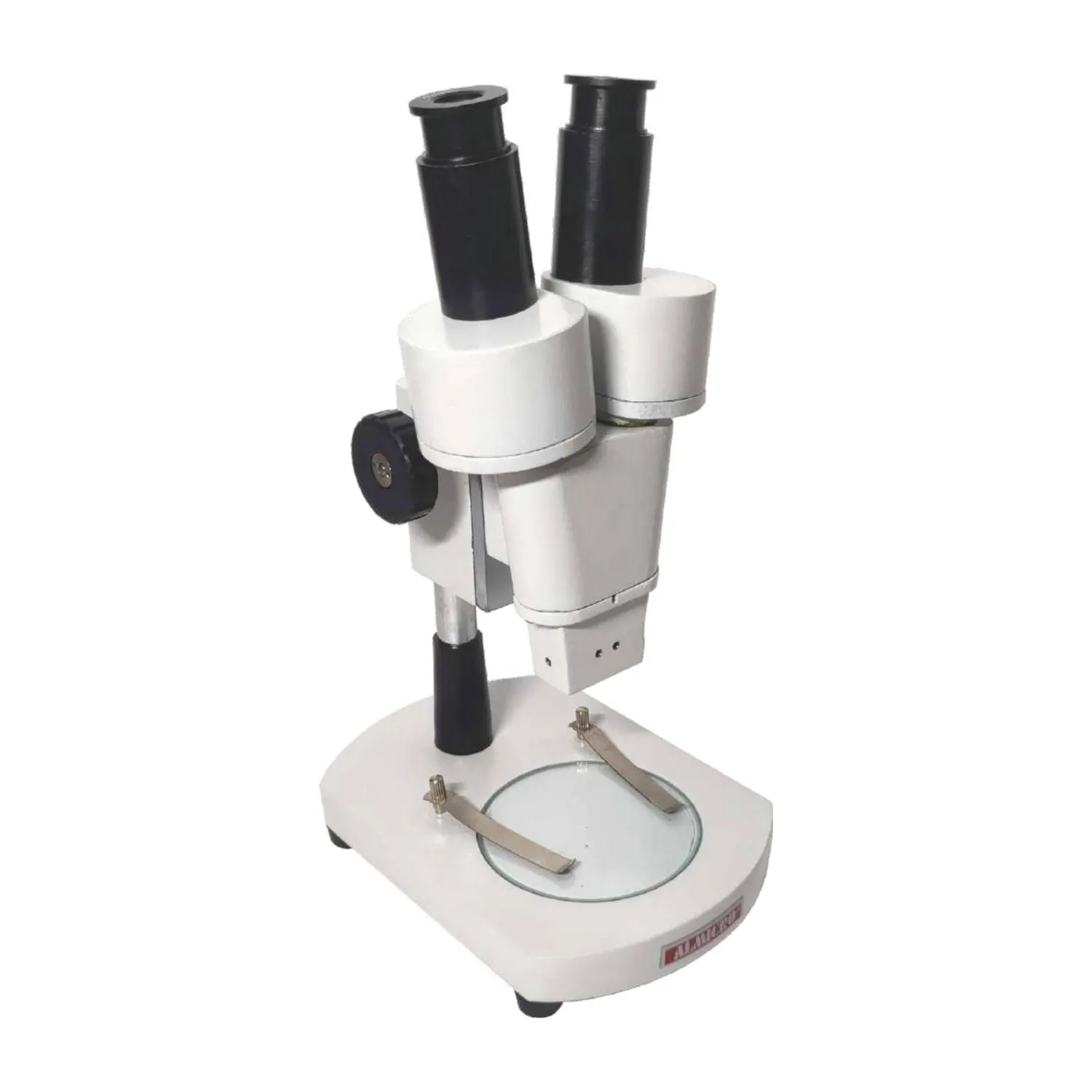

Stereo Straight Binocular Microscope (DS-22)
The Stereo Straight Binocular Microscope DS-22 ALMICRO is designed for student-level dissection and biological specimen inspection. It features long working distance achromatic objectives and wide-field eyepieces that produce large, bright, and clear stereo images. The microscope is lightweight yet sturdy, with a base, stage clips, and a reversible black and white contrast plate for stable specimen handling. The straight binocular head with interpupillary adjustment and hand grip ensures safe, comfortable use. Optional transillumination base enhances observation of transparent samples.
Stereo Straight Binocular Microscope (DS-22)
Specifications Table – Stereo Straight Binocular Microscope DS-22 ALMICRO
| Category | Specification |
|---|---|
| Microscope Type | Student stereo binocular microscope |
| Head Type | Straight binocular head with interpupillary adjustment |
| Objectives | Fixed achromatic 2X or 3X |
| Eyepieces | Paired WF 10X or WF 15X |
| Working Distance | Long working distance objectives |
| Stage | Reversible black & white plate with clips |
| Base | Lightweight and sturdy with hand grip |
| Stand Type | Pillar stand with dioptric correction |
| Illumination | Optional transillumination base |
| Optics Quality | Large, bright, and clear stereo images |
| Application | Dissection, specimen inspection, basic biology |
Purpose
This microscope is ideal for schools, colleges, and training laboratories. It is used for examining plant and animal specimens, insects, small organisms, and routine biology exercises. Its design supports clear 3D visualization, making it easier for students to learn dissection, observation techniques, and basic specimen analysis.
Working Principle
The DS-22 works on stereoscopic optical principles, where two separate optical paths deliver slightly different images to each eye. The brain combines these images into a three-dimensional view, allowing depth perception and clear visualization of specimens. Fixed achromatic objectives provide accurate color reproduction, while wide-field eyepieces ensure bright, large images. Optional transillumination allows light to pass through thin or transparent samples for enhanced observation.