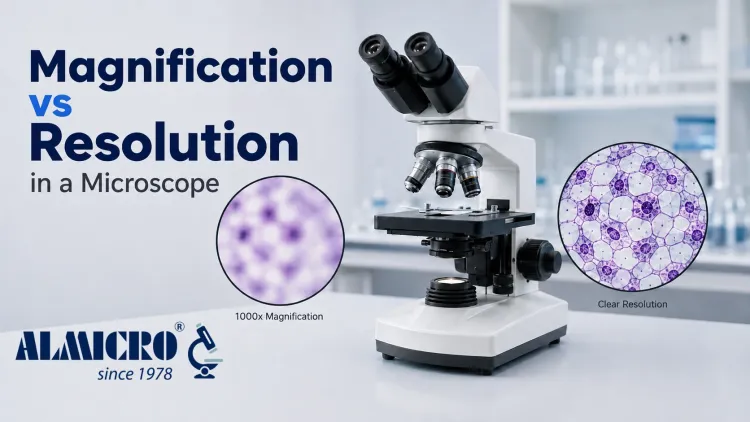
Magnification vs Resolution in a Microscope: Why 1000x Isn’t Always Better | ALMICRO
Somewhere in a school lab right now, a student is squinting at a blurry blob under a microscope that proudly says "2000x" on the box. The number isn't lying. It just isn't telling the whole story.
This magnification vs resolution microscope guide breaks down what each spec actually controls, and why the bigger number isn't always the win it looks like.
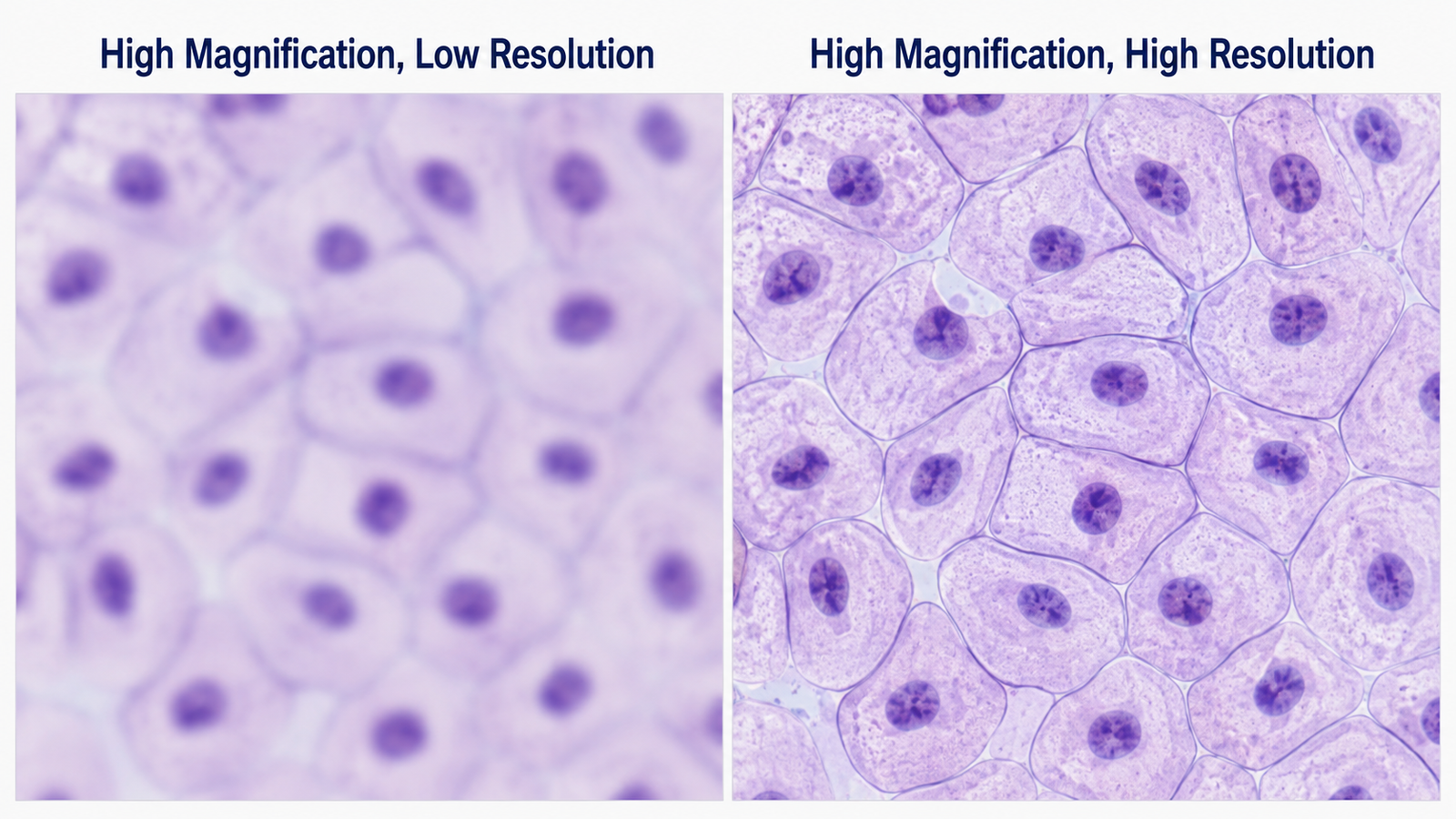
Magnification makes an object look bigger. Resolution decides how much real detail you can see. They're controlled by completely different parts of the microscope, which is why a 1000x figure on a box tells you very little about actual image quality.
Magnification vs Resolution: The Core Difference
Think of it like a printed photo. Enlarging a blurry photo doesn't add detail, it just makes the blur bigger. A microscope works the same way.
Microscope Magnification: How It's Actually Calculated
Total magnification = objective lens magnification × eyepiece magnification
That's the entire total magnification formula. Every "400x" or "1000x" printed on a microscope traces back to this one multiplication.
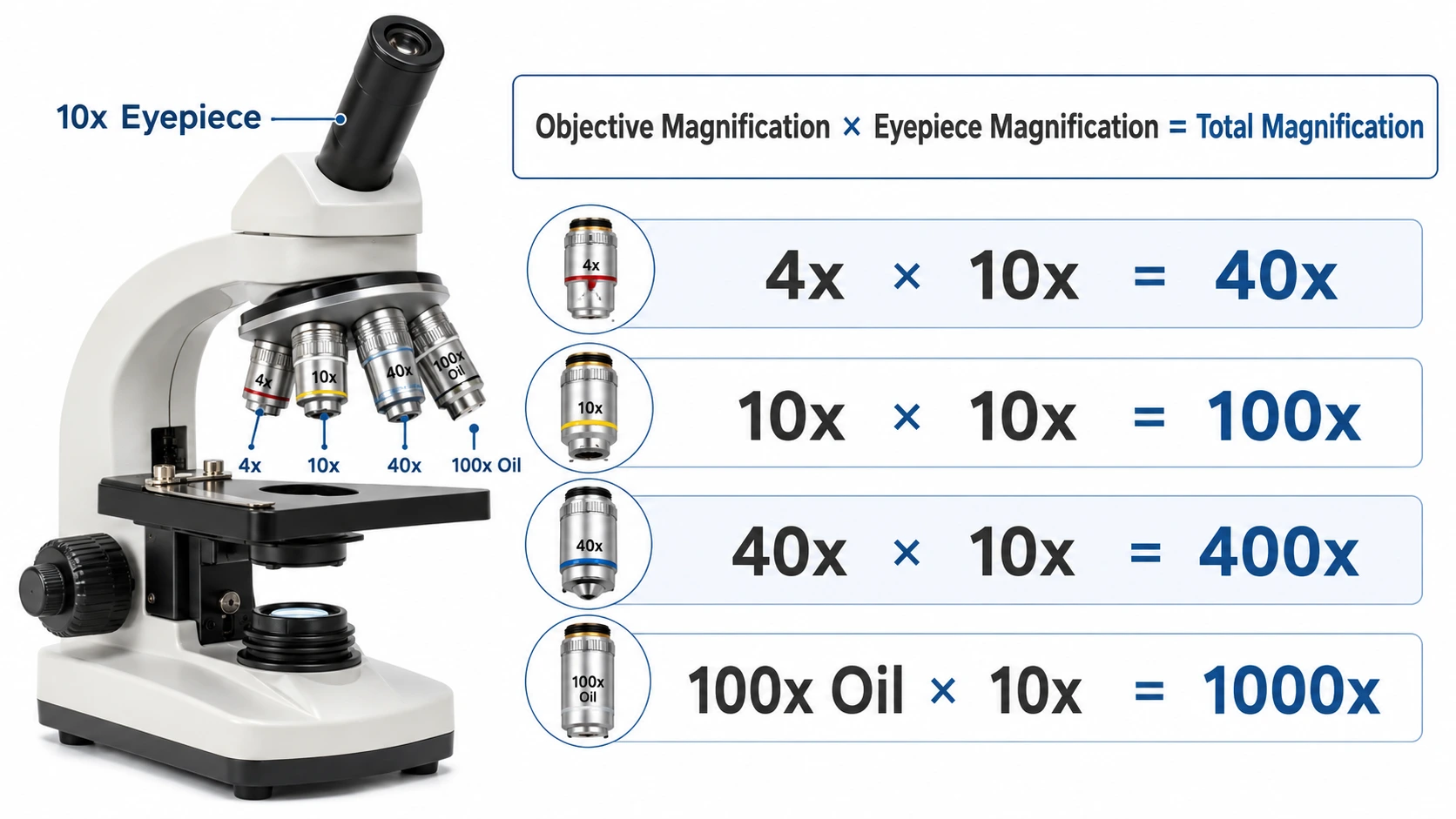
So a "1000x" microscope is usually just a 100x oil immersion objective paired with a 10x eyepiece. Some sellers advertise 2000x by fitting a stronger eyepiece instead. The number on the box climbs. The details don't.
What Empty Magnification Actually Means
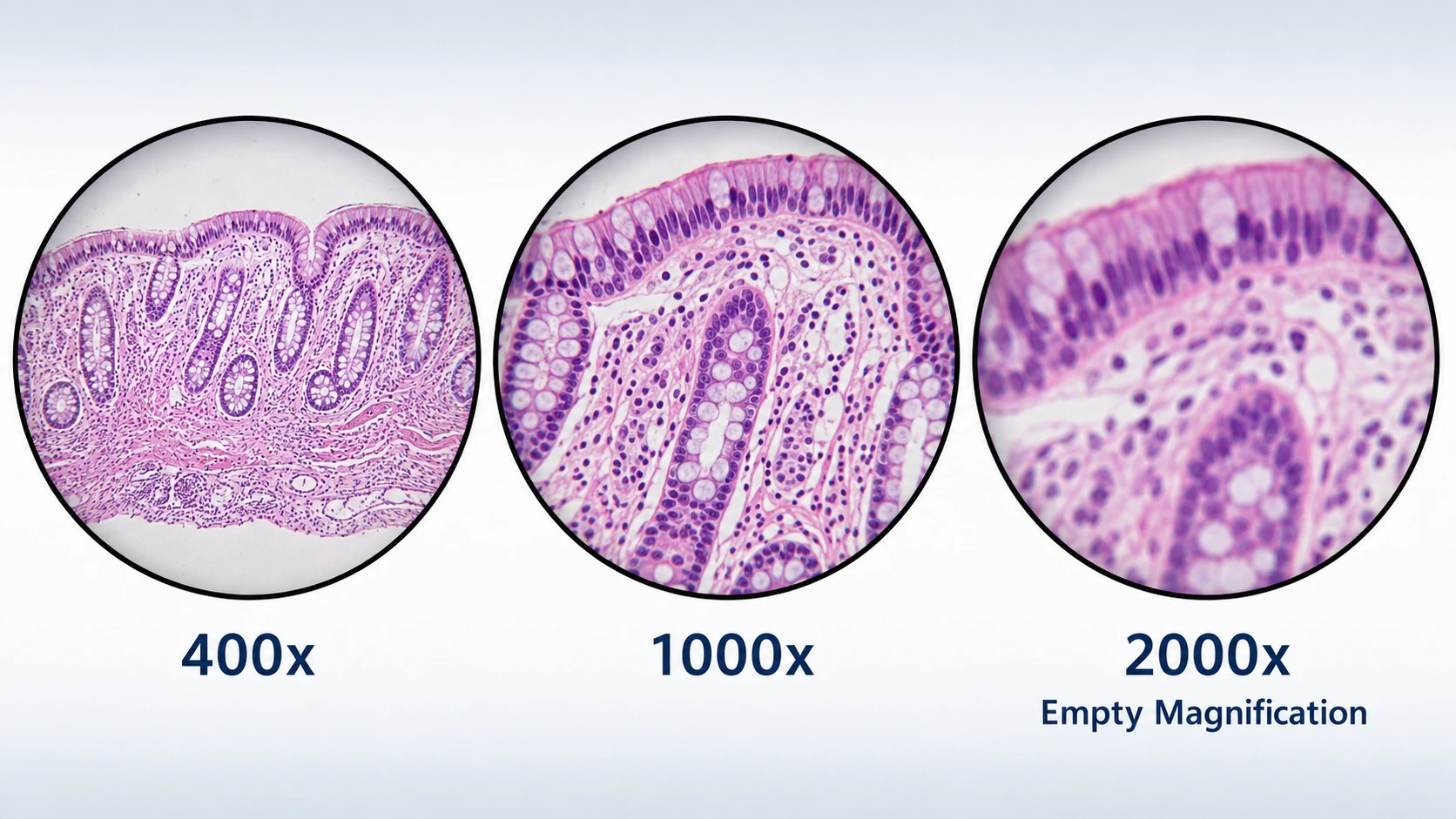
Empty magnification is enlargement that adds no new information to the image.
Every microscope has a resolution ceiling set by the wavelength of light, roughly 0.2 micrometres for a good light microscope. Push magnification past that ceiling and you're just enlarging the same blur.
Maximum useful magnification ≈ 1000 × numerical aperture of the objective
A 100x oil immersion objective at NA 1.25 gives a useful ceiling of about 1250x. A budget microscope advertising 2000x is a warning sign, not a feature.
Numerical Aperture: The Number That Actually Matters
Numerical aperture (NA) describes how much light an objective lens can gather, and more light gathered means finer detail resolved. The resolution of a microscope is set by this number, not by the eyepiece.
You'll find NA printed on the objective barrel, right after the magnification figure.
Two microscopes can both say 40x. If one has NA 0.65 and the other 0.45, the first shows noticeably more detail even though the magnification is identical.
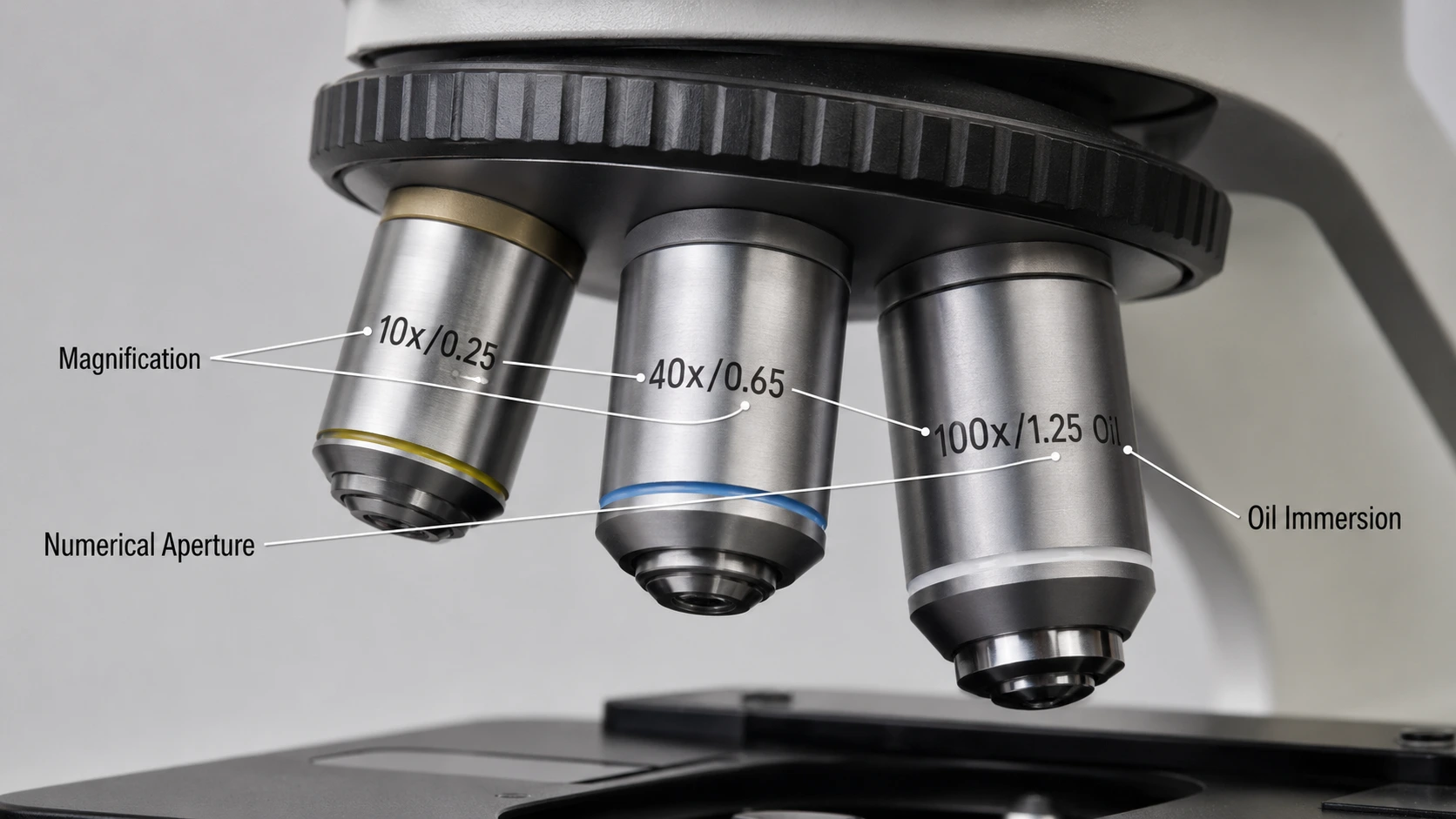
This isn't guesswork. The Abbe resolution formula (d = λ ÷ 2NA) is what sets that 0.2 micrometre limit, and a condenser matched to the objective's NA is what lets the objective actually reach it. Oil immersion works because immersion oil matches the refractive index of glass, which is how a 100x objective crosses NA 1.0 in the first place.
How Much Magnification Do You Actually Need?
Here's a realistic microscope magnification range for each type of lab.
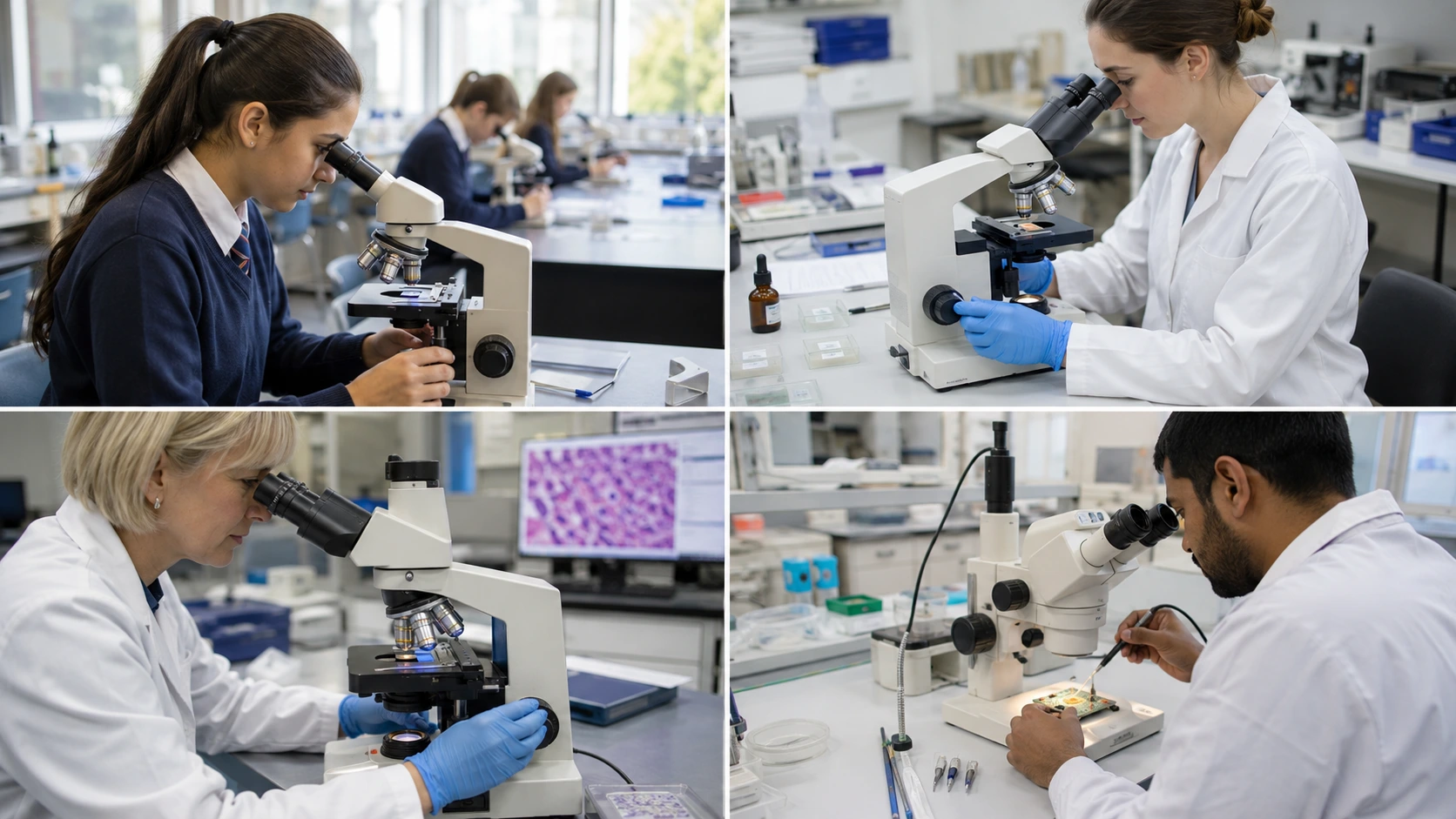
Most school work happens at 100x and 400x. Very few students need 1000x. Paying for oil immersion on a school microscope usually just means an objective that sits unused.
What to Check Instead of the Magnification Number
- Numerical aperture of each objective, printed on the barrel. Higher is better.
- Objective type. Achromatic is fine for routine work; plan objectives give a flat, sharp field for pathology and photography.
- Condenser quality. An Abbe condenser at NA 1.25 with a working iris matters more than an extra objective ever will.
- Illumination. LED stays cool and holds consistent colour over years of use.
- Mechanical stage. Smooth coaxial movement is what makes 400x and 1000x actually usable in practice.
- Build quality. A heavy, well machined body holds focus. A light plastic frame drifts.
Why Choose ALMICRO
ALMICRO has manufactured microscopes in India since 1978, under our parent company Micro Measure & Instruments. Every objective we produce carries its numerical aperture value stamped on the barrel, so labs can compare specifications honestly instead of chasing a headline magnification number.
We build for Indian conditions: sealed optics that resist fungal growth through monsoon months, LED illumination that holds up through voltage fluctuation, and mechanical stages that stay aligned through years of student handling. Spares and service come from within India.
If you're specifying a microscope for a school, college, or pathology lab, request a specification sheet from ALMICRO and we'll help match the optics to the work you actually do.