A Pathological Monocular Microscope is a specialized optical instrument used in pathology laboratories to examine biological samples such as tissues, cells, blood smears, and body fluids. It plays a vital role in disease diagnosis, medical research, and academic training. Designed for high precision and clarity, pathological microscopes are equipped with quality optics, stable mechanical structures, and efficient illumination systems. These microscopes are widely used in hospitals, diagnostic centers, and medical colleges to support accurate observation and reliable pathological analysis.
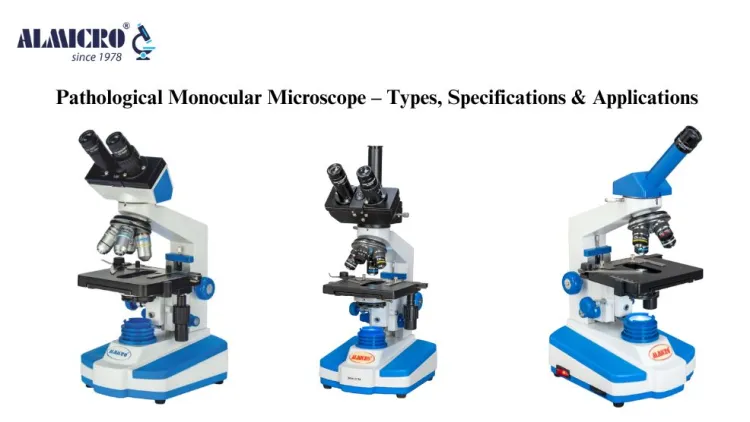
Pathological Microscope – Types, Specifications & Applications
Introduction to Pathological Microscope
Types of Pathological Microscope
There are five commonly used types of pathological microscopes, each designed to meet specific laboratory requirements.
1. Pathological Medical Microscope BM-6mo
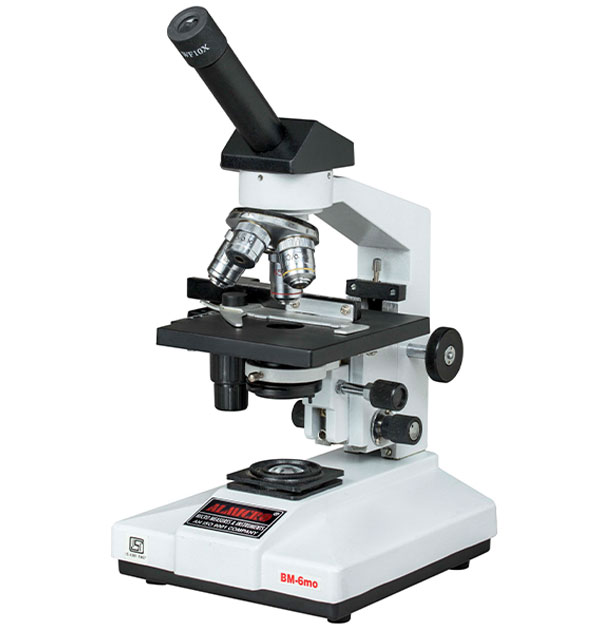
The Pathological Monocular Medical Microscope BM-6mo is a sturdy and dependable microscope developed for routine pathological and medical applications. It features a heavy die-cast body, precise monocular viewing system, and achromatic objectives that deliver clear and sharp images. This model is ideal for medical colleges, pathology labs, and diagnostic centers requiring consistent performance and long-term reliability.
Key Specifications
-
Monocular inclined observation tube
-
10x wide field eyepiece
-
Triple or quadruple nosepiece
-
Achromatic objectives: 4x, 10x, 40x (SL), 100x oil immersion
-
Coarse and fine focusing mechanism
-
Mechanical stage with slide holding clips
-
Abbe condenser with iris diaphragm
-
Mirror or LED illumination option
Applications
-
Histopathology laboratories
-
Medical education institutions
-
Clinical diagnostic centers
-
Routine pathological examinations
Advantages
-
Stable construction
-
Accurate focusing
-
Cost-effective for institutional use
-
Easy maintenance
2. Pathological Binocular Microscope BM-6bi
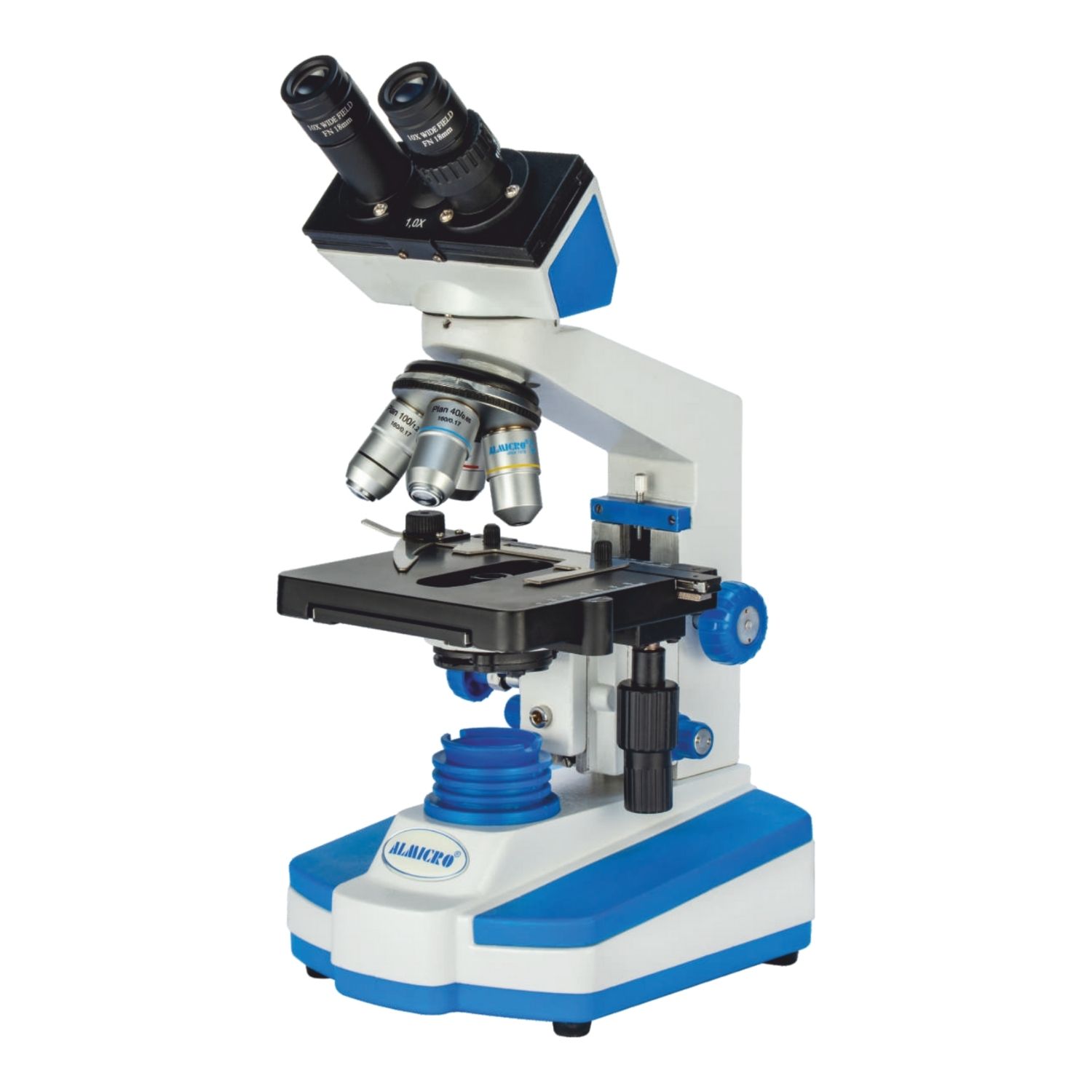
The Pathological Binocular Microscope BM-6bi is designed for laboratories that require enhanced mechanical stability and optical precision. Built with a rigid structure and smooth focusing mechanism, it ensures accurate slide examination during prolonged use. Its high-quality optics and efficient illumination system make it suitable for routine pathology diagnostics and academic laboratory environments.
Key Specifications
-
Precision mechanical stage (120 × 125 mm approx.)
-
High-quality achromatic objectives
-
LED illumination with intensity control
-
Co-axial focusing system
-
Rigid metal body with vibration resistance
Applications
-
Diagnostic pathology labs
-
Teaching hospitals
-
Research institutions
Advantages
-
Upgrade-friendly design
-
High optical clarity
-
Long operational life
3. Pathological Monocular Microscope BM-8mo
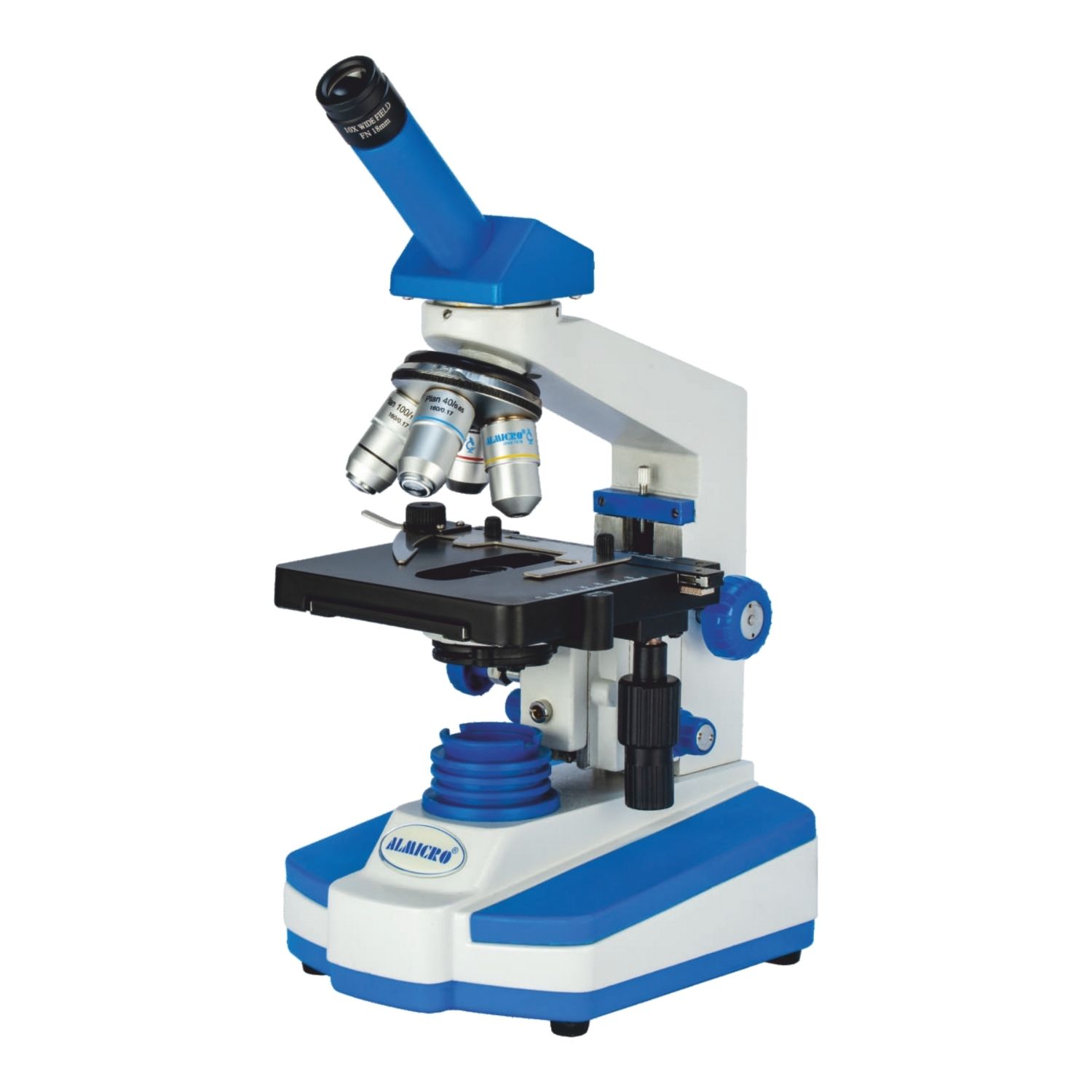
The Pathological Monocular Microscope BM-8mo is an advanced model developed for laboratories demanding superior optical clarity and smoother operation. It comes with a refined focusing system, reliable illumination, and a precision mechanical stage. This microscope is widely used in pathology labs and medical institutions where detailed sample observation and operational comfort are essential.
Key Specifications
-
Inclined monocular head
-
Wide field eyepiece for extended viewing
-
Quadruple nosepiece with positive click stops
-
Achromatic objectives up to 100x oil immersion
-
Co-axial coarse and fine focusing
-
LED illumination with brightness regulator
-
Abbe condenser with swing-out filter holder
Applications
-
Advanced pathology labs
-
Medical colleges
-
Diagnostic research facilities
Advantages
-
Smooth slide movement
-
Improved illumination control
-
Enhanced durability
4. Pathological Monocular Microscope BM-8bi
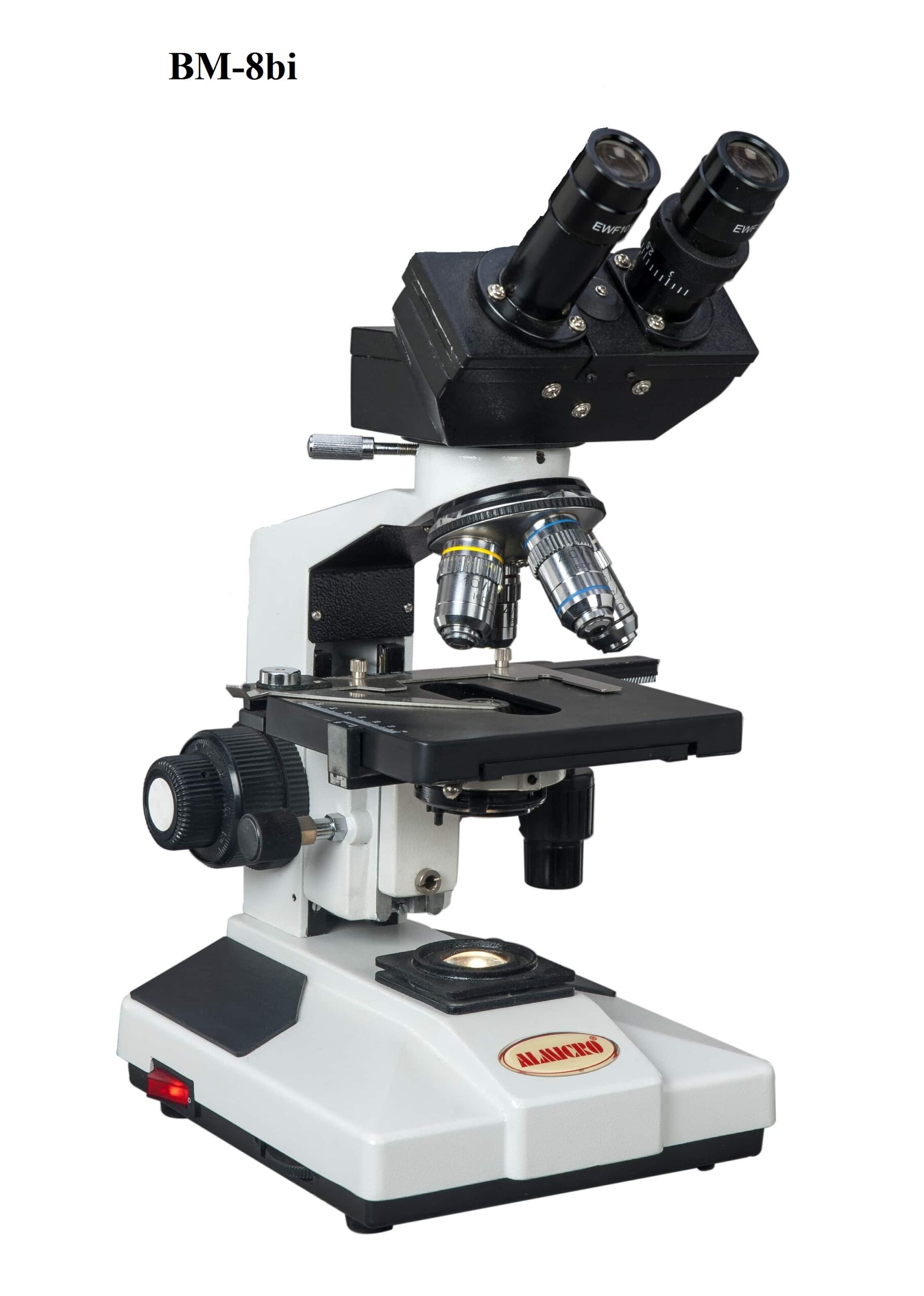
Click here to get RBM (BM-8Bi)
The Pathological Monocular Microscope BM-8bi offers improved ergonomics, enhanced optical alignment, and a robust mechanical design. It is engineered for high-performance pathological analysis with consistent image quality. This model is suitable for professional diagnostic laboratories and research institutions that require accurate, repeatable results and durable laboratory equipment.
Key Specifications
-
Heavy duty C-shaped stand
-
Precision ball-bearing nosepiece
-
Semi-plan achromatic objectives
-
High-resolution LED illumination
-
Fine focusing with low backlash
-
High-quality condenser system
Applications
-
High-volume pathology labs
-
Academic research
-
Advanced diagnostic centers
Advantages
-
Exceptional image clarity
-
Reduced eye strain
-
Professional-grade build quality
5. Inclined Pathological Microscope BM-6mo
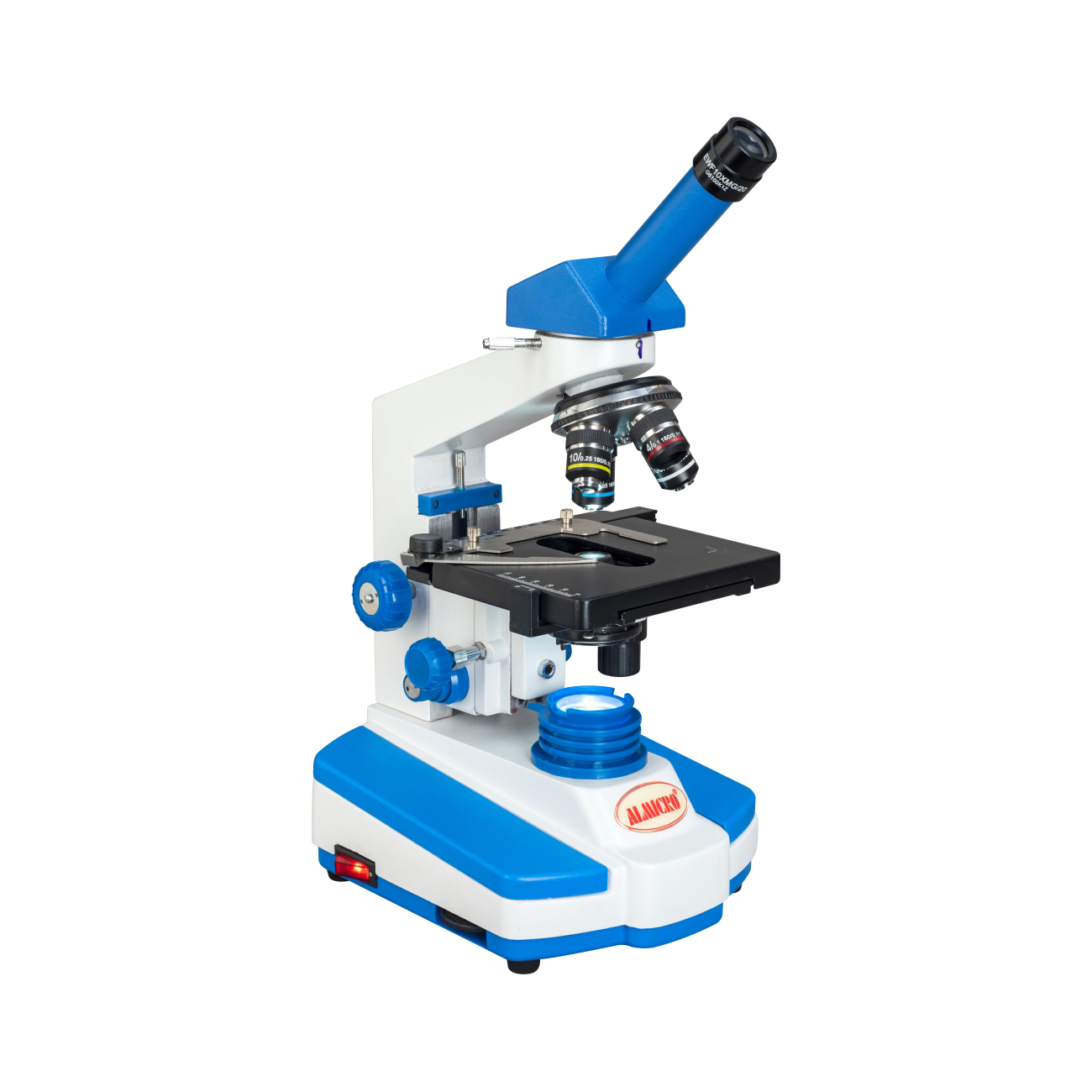
The Inclined Monocular Pathological Microscope BM-6mo is specially designed to provide user comfort during extended observation sessions. Its inclined monocular head reduces strain while maintaining optical accuracy. Combined with reliable objectives, smooth focusing, and stable construction, this microscope is ideal for teaching laboratories and routine pathology work requiring long hours of continuous use.
Key Specifications
-
Ergonomically inclined monocular tube
-
Achromatic objectives (4x to 100x oil)
-
Precision focusing system
-
Mechanical stage with smooth controls
-
LED or mirror illumination
Applications
-
Teaching laboratories
-
Long observation sessions
-
Routine pathology analysis
Advantages
-
User comfort
-
Stable image focus
-
Ideal for continuous use
Optical System of Pathological Microscope
A Pathological Monocular Microscope uses a compound optical system consisting of:
-
Eyepiece (10x Wide Field)
-
Achromatic / Semi-Plan Objectives
-
Abbe Condenser with Iris Diaphragm
This configuration ensures accurate color reproduction, sharp contrast, and minimal aberrations.
Mechanical Construction & Focusing System
High-quality Pathological Monocular Microscopes are built using:
-
Die-cast aluminum bodies
-
Co-axial coarse and fine focusing
-
Precision rack-and-pinion mechanisms
-
Ball-bearing guided stage movement
These features ensure smooth operation, long service life, and repeatable accuracy.
Illumination System
Modern Pathological Monocular Microscopes are equipped with:
-
LED illumination with long lifespan
-
Adjustable intensity control
-
Low heat generation
-
Energy-efficient operation
Some models also support mirror-based illumination for power-independent usage.
Applications of the Pathological Monocular Microscope
-
Histopathology
-
Hematology
-
Cytology
-
Microbiology
-
Medical education
-
Diagnostic laboratories
-
Research institutes
How to Choose the Right Pathological Microscope
When selecting a Pathological Monocular Microscope, consider:
-
Type of application
-
Optical quality required
-
Frequency of use
-
Ergonomic requirements
-
Future upgrade compatibility
Choosing the right model ensures accuracy, efficiency, and long-term value.
Maintenance & Care
-
Clean optics regularly with lens paper
-
Avoid direct exposure to dust and moisture
-
Cover microscope when not in use
-
Periodic professional servicing
Proper maintenance extends the life of your Pathological Monocular Microscope.
Wrapped Notes
A Pathological Microscope remains an indispensable tool in medical diagnostics and education. With multiple configurations like BM-6mo, BM-6bi, BM-8mo, BM-8bi, and Inclined BM-6mo, laboratories can select models that perfectly match their operational needs. Built for precision, durability, and reliability, these microscopes continue to support accurate diagnosis and medical excellence across pathology laboratories worldwide.
Frequently Asked Questions (FAQs)
1. What is a Pathological Monocular Microscope?
A Pathological Monocular Microscope is a laboratory instrument used to examine tissues, cells, blood smears, and biological samples. It is widely used in pathology labs, hospitals, and medical colleges for disease diagnosis, routine analysis, and academic training.
2. Where is a Pathological Monocular Microscope commonly used?
Pathological monocular microscopes are commonly used in histopathology labs, diagnostic centers, hospitals, medical colleges, research institutes, and teaching laboratories for accurate microscopic examination of pathological samples.
3. What is the difference between a pathological microscope and a regular laboratory microscope?
A pathological microscope is designed for medical and diagnostic use, offering higher optical precision, stable mechanical construction, and compatibility with oil immersion objectives. Regular laboratory microscopes are usually meant for basic educational purposes and routine observations.
4. What types of samples can be examined using a Pathological Monocular Microscope?
This microscope can examine tissue sections, blood smears, urine sediments, cytology samples, bacteria, parasites, and other biological specimens required for pathological analysis.
5. What magnification range is available in a Pathological Monocular Microscope?
Most pathological monocular microscopes support magnifications from 40x to 1000x, using objectives such as 4x, 10x, 40x (spring-loaded), and 100x oil immersion.
6. Is a Pathological Monocular Microscope suitable for medical students?
Yes, a Pathological Monocular Microscope is highly suitable for medical and paramedical students due to its ease of use, cost-effectiveness, and accurate optical performance required for academic and practical training.
7. What illumination system is used in modern pathological microscopes?
Modern pathological monocular microscopes typically use LED illumination with adjustable intensity, offering long life, low heat generation, and energy efficiency. Some models also provide mirror-based illumination for power-independent operation.
8. How do I choose the right Pathological Monocular Microscope for my laboratory?
To choose the right microscope, consider factors such as type of application, optical quality, frequency of use, ergonomic comfort, illumination type, and future upgrade options. Selecting the correct model ensures accuracy and long-term reliability.
9. What maintenance is required for a Pathological Monocular Microscope?
Regular maintenance includes cleaning lenses with lens paper, protecting the microscope from dust and moisture, covering it when not in use, and periodic professional servicing to maintain optical clarity and mechanical performance.
10. Can a Pathological Monocular Microscope be used for long observation sessions?
Yes, especially models with inclined monocular heads and smooth focusing systems are designed for long observation sessions, reducing user strain while maintaining consistent image quality.